
Focusing-Oriented Therapy Training

9th January 2027 - 17th July 2027 Inner Focus, Norwich
Specialist Workshop/Event
Description
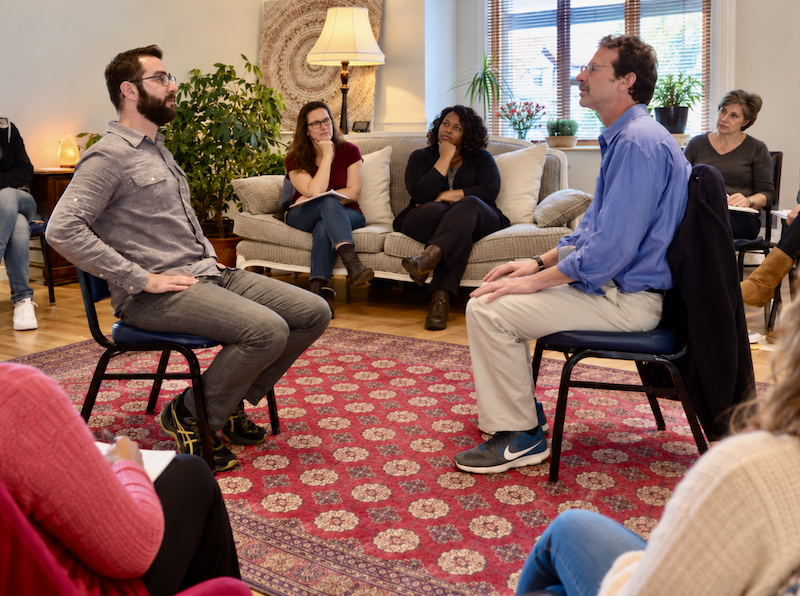
A Unique 60-hour intensive experiential training open to a small cohort of just six trainees: for qualified counsellors/ psychotherapists who already have Focusing skills and want to develop greater confidence in facilitating clients’ Focusing processes naturally within their therapeutic practice. Drawing on the pioneering work of Eugene Gendlin, the course explores how therapists can recognise and respond to the felt sense and edge of awareness, helping clients access what is implicitly known but not yet fully understood or expressed.
Through experiential practice, demonstrations, power point presentation, discussion of client work and key readings from Gendlin, trainees will develop their ability to:
- Recognise and facilitate the emergence of a felt sense
- Work sensitively at the edge of awareness
- Develop experiential responses that deepen therapeutic process
- Help clients find words, images and other symbols for bodily felt experience
- Recognise small steps, felt shifts and therapeutic movement
- Work creatively with art, body maps, sand tray, and movement
- Explore inner critic work, including Focusing-oriented two-chair practice
- Integrate Focusing naturally within a therapeutic relationship
- Develop greater confidence in recognising and facilitating meaningful therapeutic change
The course is mainly experiential, with opportunities to practise as therapist, client and observer, alongside reflective discussion of anonymised clinical work
Certification
Upon passing the course, you will be recommended for certification from the International Focusing Institute (TIFI) as a ‘Focusing Facilitator Specialising in Focusing-Oriented Therapy’.
Course Structure
6 in-person Saturdays — 10am–5pm
10 online Monday evenings — 6.30-9pm
60 hours of taught training, plus reading, Focusing partnerships, supervision and reflective practice.
Core reading includes Gendlin’s The Client’s Client: The Edge of Awareness, The Experiential Response, A Theory of Personality Change, The Small Steps of the Therapy Process, Client-Centered Therapy as a Frame of Reference for Training: The Use of Focusing During Therapy, and Focusing-Oriented Psychotherapy: A Manual of the Experiential Method.